
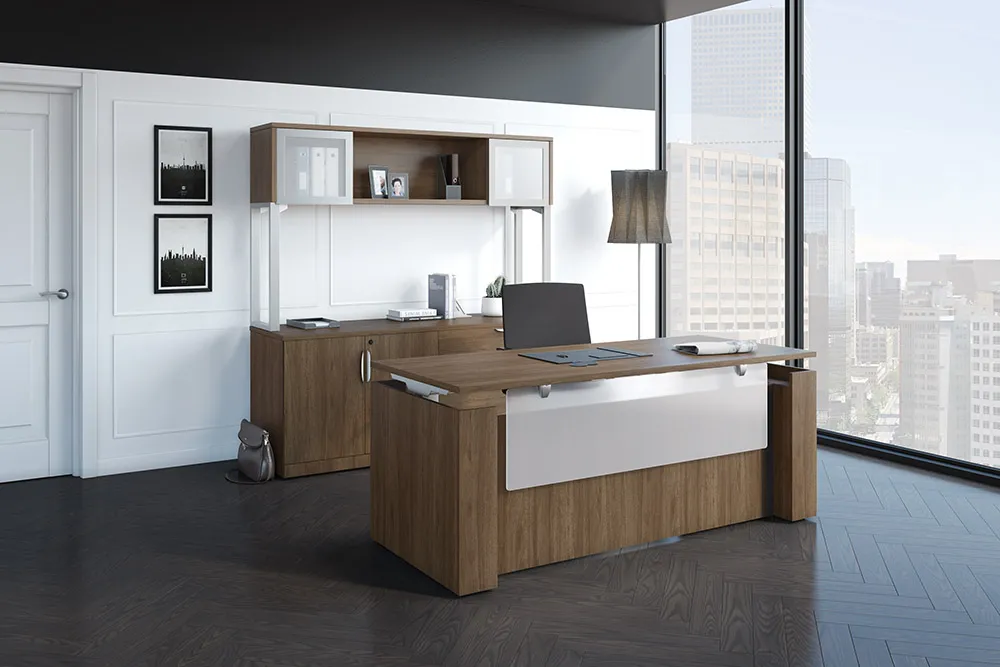
The concept of the home office has evolved more in the last five years than in the previous fifty. In 2026, the home office is no longer a secondary workspace — it is the command center of modern business, entrepreneurship, and executive leadership. Whether you are running a company, managing teams, producing content, consulting clients, or building a personal brand, your home office directly influences your output, your health, your credibility, and your earning potential.
This executive guide is designed to serve as the most complete, authoritative, and actionable resource available for building a world-class home office. It combines the latest research in ergonomics, neuroscience, productivity science, acoustics, lighting, and workspace engineering with hands-on product recommendations that allow you to implement a professional-grade home office immediately.
Key Insight: A high-performance home office is not an expense — it is a capital investment in your productivity, longevity, and income.
- Foundational Principles of an Elite Home Office
- Planning Your Home Office Build
- Home Office Layout & Space Design
- Core Furniture & Structural Components
- Ergonomics & Long-Term Health Engineering
- Lighting & Visual Performance
- Technology Infrastructure & Connectivity
- Audio, Video & Virtual Presence
- Productivity Optimization Systems
- Top Home Office Product Recommendations
- Critical Mistakes to Avoid
- Ultimate Home Office Build Checklist
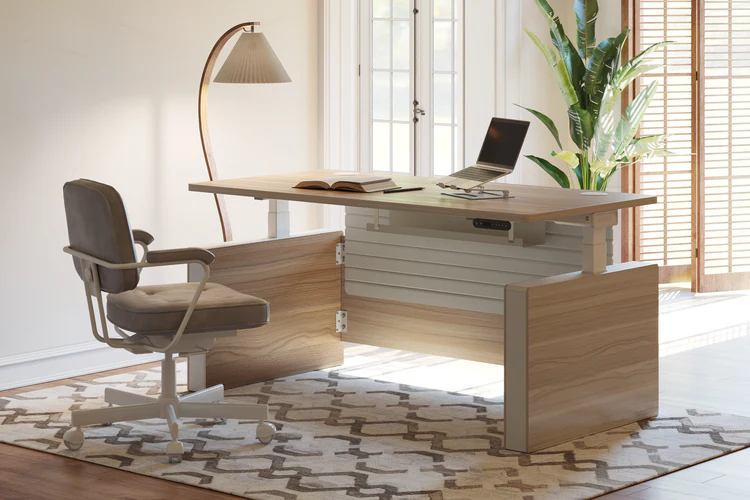
Foundational Principles of an Elite Home Office
Every successful home office is built upon three core principles: biomechanical alignment, cognitive optimization, and operational efficiency. Ignore any one of these and performance deteriorates. Master all three and the home office becomes a force multiplier.
Biomechanical alignment ensures that your body remains in optimal posture throughout long working sessions. Cognitive optimization eliminates distractions and preserves mental energy. Operational efficiency ensures that every tool, process, and workflow is engineered to minimize friction and maximize throughput. Executive Rule: If your home office does not make you faster, healthier, and more focused, it is underperforming.
Planning Your Home Office Build
Planning your home office begins with a precise definition of your work profile. The needs of a content creator differ from those of a CFO, a software architect, or a remote sales executive. Identify your primary workflows: deep focus work, collaboration, video communication, content production, and administrative operations.
Once workflows are defined, determine your performance requirements. How many monitors? What level of audio fidelity? How many hours per day seated? How often standing? How much storage is required? How many devices connect simultaneously? These decisions determine your infrastructure.
Budgeting should be approached as asset allocation, not expense minimization. A $5,000 home office that enables $50,000 of additional annual income is an exceptional investment.
Home Office Layout & Space Design
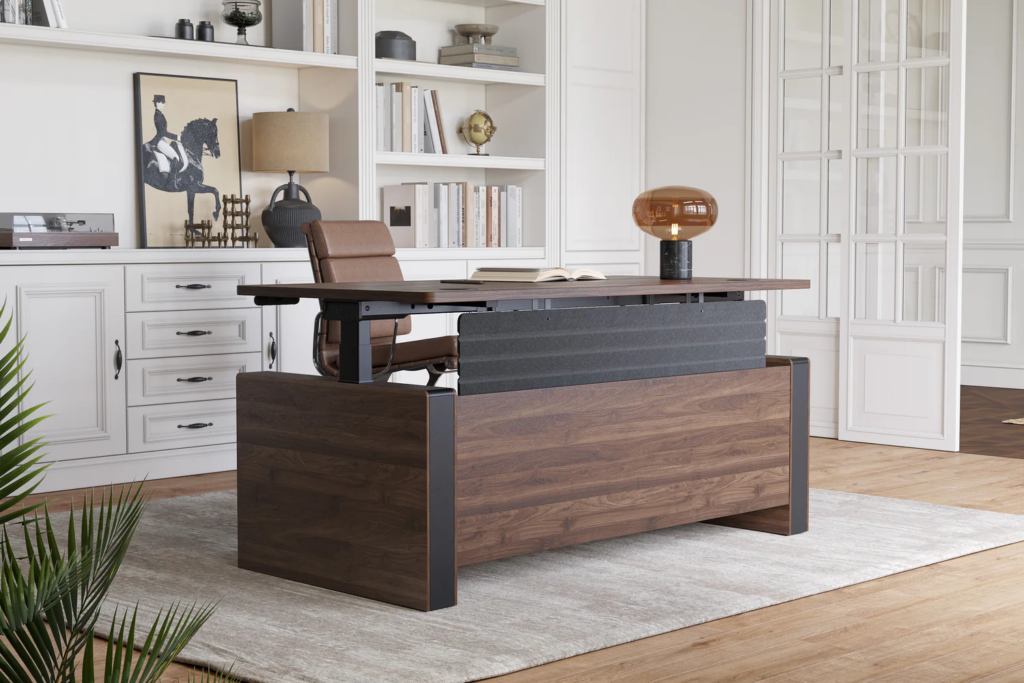
Your home office layout establishes your physical and psychological operating environment. The desk should face into the room, not toward a wall, creating a command position that increases confidence and awareness. Natural light should enter from the side to reduce glare and prevent screen washout.
Divide the room into zones: primary work zone, collaboration or call zone, and recovery zone. Even in small spaces, visual zoning improves cognitive separation between tasks. Design Tip: Always leave at least 36 inches of clearance behind your chair to allow for movement, stretching, and circulation.
Core Furniture & Structural Components
Executive Desk
Your desk is the foundation of your home office. It must support heavy monitor arms, vibration-free typing, and dynamic movement. Motorized standing desks with dual motors and steel frames are now standard at the executive level.
Professional Task Chair
A premium ergonomic chair prevents spinal compression, shoulder fatigue, and nerve impingement. Adjustable lumbar, seat depth, recline tension, and breathable mesh are mandatory features.
Storage Systems
Storage should be functional and invisible. Floating shelves, low-profile cabinets, and concealed drawers preserve visual simplicity while maintaining access to critical tools and documents.
Ergonomics & Long-Term Health Engineering
Ergonomics is the difference between sustainable productivity and eventual burnout. Monitors should sit at eye level, elbows at 90 degrees, wrists neutral, and feet flat or on a footrest. Standing sessions should comprise 25–40% of your workday.
Micro-movements throughout the day — stretching, posture shifts, and walking breaks — maintain circulation and cognitive clarity. Health Rule: If your home office causes pain, it is structurally defective.
Lighting & Visual Performance
Lighting controls circadian rhythm, alertness, and eye strain. The optimal home office uses a three-layer system: ambient lighting, task lighting, and bias lighting behind displays.
High CRI LED lights with adjustable color temperature reduce fatigue and enhance focus during long sessions.
Technology Infrastructure & Connectivity
The modern home office requires enterprise-grade connectivity. Fiber internet, mesh Wi-Fi, redundant power via UPS systems, and docking stations are non-negotiable. Multi-monitor configurations increase productivity by up to 42%.
Peripheral selection — keyboards, mice, webcams, microphones — must prioritize reliability, ergonomics, and low-latency performance.
Audio, Video & Virtual Presence
Your home office is your broadcast studio. A professional microphone, 4K webcam, controlled lighting, and acoustic treatment ensure clear communication and authority during virtual meetings.
Acoustic panels, rugs, and soft surfaces reduce echo and improve vocal clarity dramatically.
Productivity Optimization Systems
Noise control, air quality, humidity, and temperature stability all influence cognitive output. Smart thermostats, HEPA air purifiers, white noise generators, and humidity monitors complete the high-performance environment.
Top Home Office Product Recommendations
Affiliate Disclosure: Some of the links below are affiliate links. If you purchase through them, we may earn a commission at no additional cost to you.
| Product | Description | Key Benefits | Link |
|---|---|---|---|
| FlexiSpot E7 Plus Standing Desk | Heavy-duty executive standing desk | Exceptional stability, programmable height, premium build | Buy on Amazon |
| Herman Miller Aeron Chair | Iconic ergonomic executive chair | Unmatched comfort, posture support, long-term durability | Buy on Amazon |
| BenQ ScreenBar Halo | Monitor-mounted LED task light | Reduces eye strain, automatic brightness, no glare | Buy on Amazon |
| Logitech MX Master 3S | Advanced productivity mouse | Precision control, multi-device support, silent clicks | Buy on Amazon |
| Keychron Q1 Pro Mechanical Keyboard | Professional mechanical keyboard | Exceptional typing experience, customization, durability | Buy on Amazon |
Critical Mistakes to Avoid
Avoid cheap chairs, undersized desks, poor lighting, weak Wi-Fi, and clutter. These are the most expensive mistakes long-term.
Ultimate Home Office Build Checklist
- Executive-grade desk & chair
- Ergonomic alignment verified
- Three-layer lighting system
- Professional audio & video setup
- Redundant power & connectivity
- Optimized storage & cable management
- Air quality & acoustic treatment
A properly engineered home office is one of the highest-return investments any professional can make. Build it with intention, precision, and commitment to excellence — and it will compound your results for decades.